
Traveling by plane involves going through a series of rigorous checks that ensure the safety of all passengers and airport staff.
Airport security screening is a fundamental part of the modern aviation system, and its effectiveness has evolved in parallel with technological advances and new challenges in global security.
The importance of security checks at the airport
The main objective of security control is to prevent illegal acts, such as the entry of weapons, explosives, or dangerous objects on board aircraft, and to ensure the protection of passengers, crew, and infrastructure. It also contributes to compliance with international regulations and confidence in air transport.
A good airport security strategy combines advanced technology, standardized procedures, and highly qualified personnel, enabling rapid response to any threat without causing unnecessary delays.
Why were airport controls tightened?
Security checks at airports have been tightened over the last few decades for several reasons:
- Terrorist attacks and threats such as those of 9/11 marked a turning point in global aviation security.
- A higher volume of passengers and daily flights requires systems to be improved to prevent failures. The largest airports in the world need to have an effective and agile system, on the other hand, the world's smallest airport It needs to be just as effective but with fewer flights.
- Technological advances that enable the detection of suspicious materials and behavior with greater precision.
All of this has led to the implementation of stricter measures, internationally standardized protocols (such as those issued by the ICAO and the EU), and more sophisticated surveillance systems.
Parts of airport security control
Checks are carried out before boarding and are designed to be as efficient and quick as possible. This is part of the landside of an airport. The main parts of the process are detailed below.
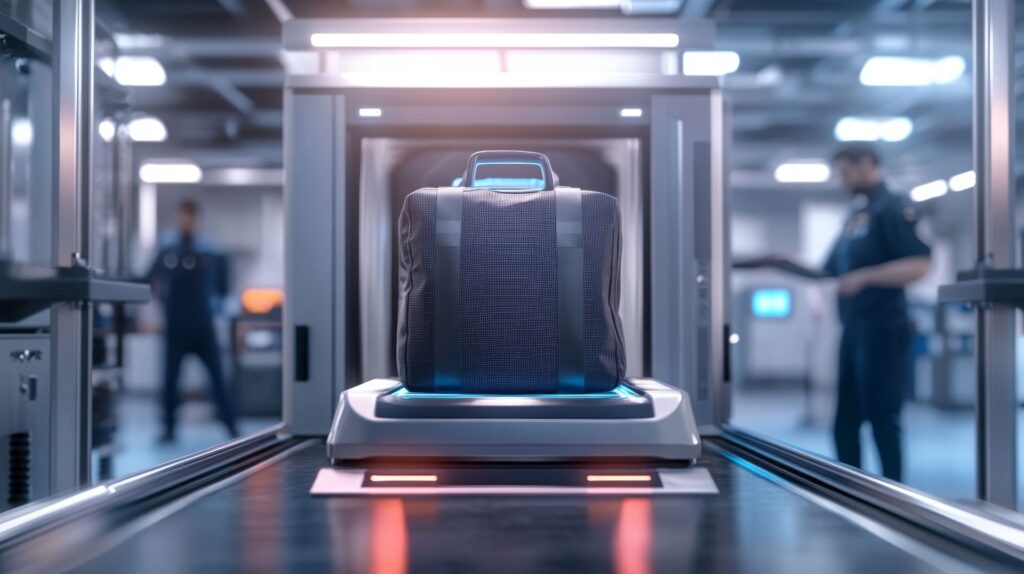
Security scanner
It is one of the most visible systems for passengers. It is used to inspect carry-on luggage using X-rays, allowing prohibited items to be detected without having to open each bag.
Some airports already use 3D scanners that offer more accurate and faster screening.
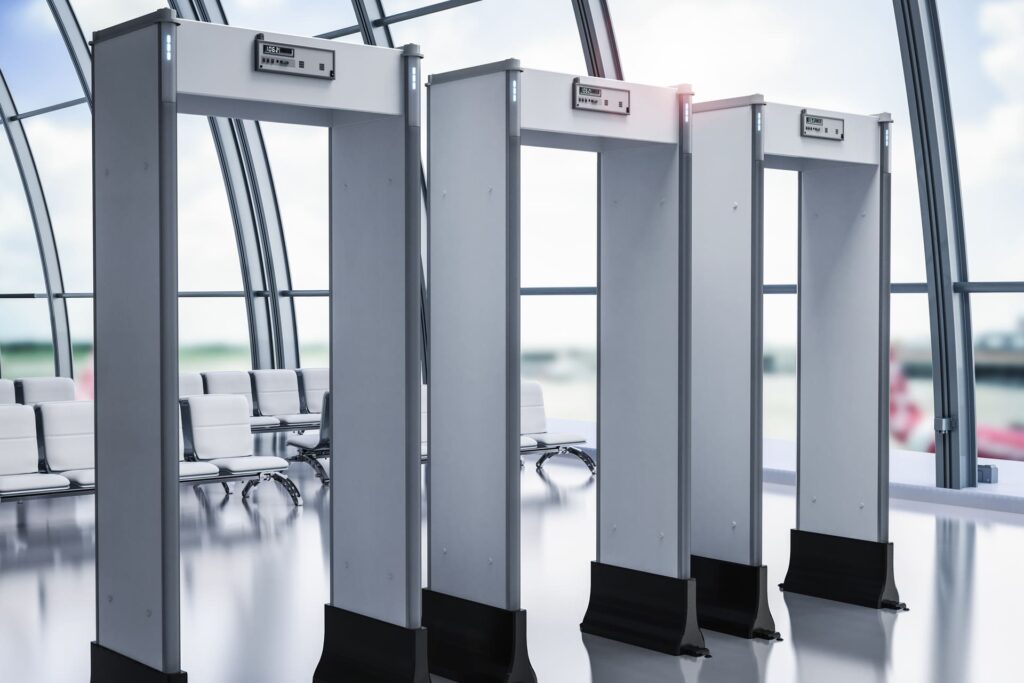
Metal detector arches
These are structures that all passengers must pass through. They detect the presence of metal objects such as weapons, knives, or tools. They are accompanied by manual inspections if the alarm is triggered.
Random airport screening
In addition to standard controls, random checks are carried out in an unpredictable manner to detect suspicious activities or unusual behavior. These may include:
- Additional carry-on baggage allowances
- Analysis of traces of explosives on personal items
- Brief security interviews
This type of control increases the overall efficiency of the system without creating a generally negative experience for the traveler.
Checked luggage: what happens to it?
Once checked in, suitcases go through an automated inspection circuit that includes:
- X-ray scanners and computed tomography
- Explosive detection systems (EDS)
- Automatic classification based on scan results
If anything suspicious is detected, the suitcase is manually inspected by authorized personnel. The entire process is monitored to ensure that suitcases arrive safely and on time at the corresponding aircraft.
Airport security personnel
Airport security agents are professionals specifically trained for this type of work. They work in collaboration with:
- Police and civil guard (at Spanish airports)
- Private security companies
- Aviation authorities and airport operators
Their work includes inspecting passengers, luggage, restricted areas, and the entire airport environment. In addition, they receive ongoing training in emergency protocols, threat detection, and passenger handling.
Conclusions on airport security control
Airport security checks are an essential part of the aviation ecosystem. Although they may seem annoying or repetitive, each measure plays a vital role in ensuring a safe and efficient environment.
In a world where threats change rapidly, it is essential to continue investing in technology, training, and intelligence systems applied to aviation security. Knowing this, Viarium it takes on special importance in this sector, as it is a company specializing in advanced solutions for transportation and infrastructure, playing a key role in this process of modernization and continuous improvement.