
Wastewater treatment is one of the key processes for environmental sustainability and public health. This procedure allows water used by human activity to be returned to the environment without endangering ecosystems or people.
From Viarium, we will take a technical and structured approach to explaining what wastewater treatment is, how it works, what its phases and systems are, and why it is key to sustainable development.
What is wastewater treatment?
The wastewater treatment is the set of processes designed to remove physical, chemical, and biological contaminants from water that has been used, whether in the domestic, industrial, or agricultural sphere. This water, also known as wastewater, contains harmful substances that must be treated before being returned to the natural environment or reused.
The main purpose of this process is not only to protect receiving bodies, such as rivers or seas, but also to ensure soil safety, preserve aquatic biodiversity and, in certain cases, enable water reuse for irrigation or industrial processes.
What is wastewater?
The term wastewater refers to water that has been affected by human intervention. In a more toxic, hygienic, or biological way, the water has been contaminated, which is why purification is required.
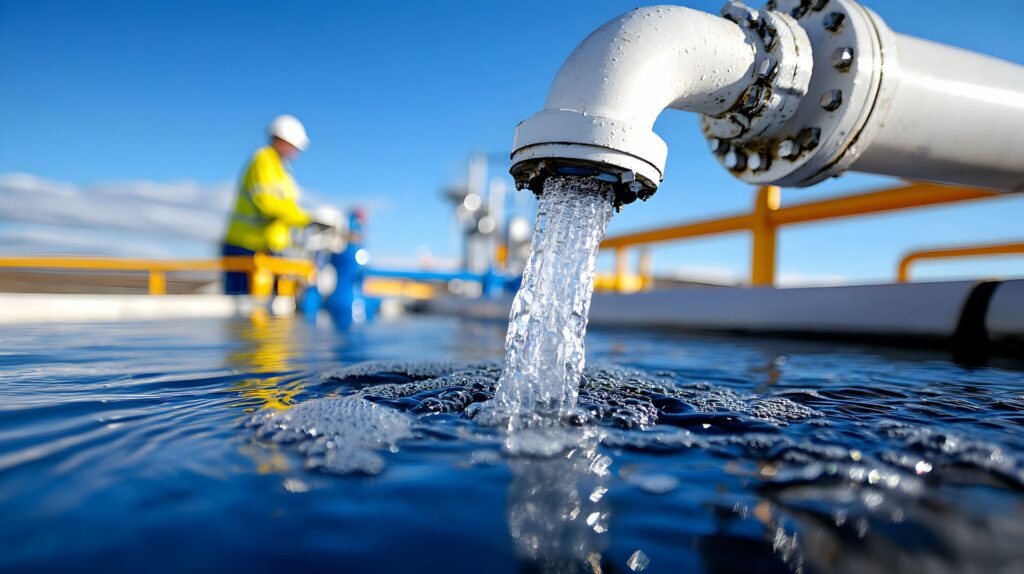
How does the wastewater treatment process work?
The purification process can be divided into several phases, which work together to ensure maximum removal of contaminants:
1. Pretreatment
This involves removing larger waste that could damage or block the system, such as plastics, sand, or coarse solids. Screens, sand traps, and grease traps are used.
2. Primary treatment
The water is left to settle in large tanks so that the sedimentable solids settle to the bottom, forming sludge, while the fats float to the surface and are removed mechanically.
3. Secondary treatment
This is where biological action comes into play. Microorganisms that break down dissolved organic matter are used. This treatment can be carried out using activated sludge, trickling filters, or biodiscs, among other systems.
4. Tertiary treatment
Advanced methods such as filtration, disinfection (with chlorine, ozone, or ultraviolet light), or nutrient removal (nitrogen and phosphorus) are used. This phase is crucial when the treated water is to be reused or discharged into particularly sensitive environments.
Types of wastewater
As mentioned above, wastewater can be classified according to its origin. This classification is expanded upon in greater technical detail below:
1. Urban wastewater
They constitute the majority of the flow treated in wastewater treatment plants. Their composition varies, but they usually have a high organic and bacterial load.
2. Industrial wastewater
They may contain toxic substances, heavy metals, volatile organic compounds, oils, among others. Their treatment requires specific solutions and, in many cases, pretreatment before being incorporated into municipal networks.
3. Agricultural wastewater
These include leachates, runoff water, and drainage water loaded with nutrients such as nitrates and phosphates, which can cause eutrophication if not treated properly.
What is the best wastewater treatment system?
There is no single ideal system, as the choice depends on multiple factors such as the volume of water to be treated, the pollutant load, the available resources, the physical space, and the final destination of the water.
However, the most effective and common systems are:
1. Activated sludge
It relies on water aeration to promote bacterial activity. It is very efficient at removing organic matter and is widely used in urban areas.
2. Biological filters
The water passes through a bed of materials (stones, plastic) where bacteria grow that break down the pollutants.
3. Artificial wetlands
Sustainable systems that mimic the functioning of a natural wetland. They are ideal for small communities or rural areas.
4. Ultrafiltration and reverse osmosis membranes
They offer advanced treatment that allows water to be reused for industrial or agricultural purposes, and even for human consumption in some cases.
In summary, having a good water infrastructure in order to treat wastewater, is key to this process. Having companies such as Viarium to build infrastructure like this guarantees work of the highest standards.

