
The recent upgrade of the ILS system at Santiago-Rosalía de Castro Airport shines a spotlight on one of the most critical yet least visible pieces of air navigation infrastructure.
When an airport is operating in fog, heavy rain, or conditions of reduced visibility, the safety of each landing depends on much more than just the pilots' skill.
Behind these operations lies a technological infrastructure capable of guiding aircraft through the most critical phases of flight and maintaining the airport's operational capacity even when visual references are virtually nonexistent.
This is the Instrument Landing System (ILS), one of the systems for air navigation one of the most important aspects of modern aviation and an essential piece of infrastructure for ensuring safe landings in adverse weather conditions.
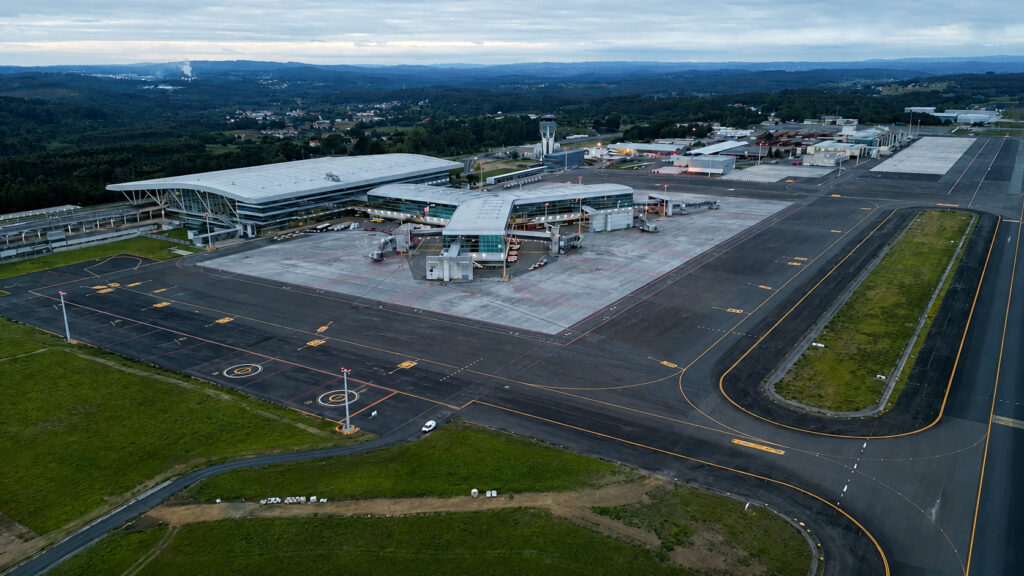
The importance of these systems was recently highlighted by the upgrade of the ILS at Santiago-Rosalía de Castro Airport, a project carried out simultaneously with improvements to the airfield and which represented one of the greatest challenges in airport coordination undertaken at the facility in recent years.
What exactly is an ILS system?
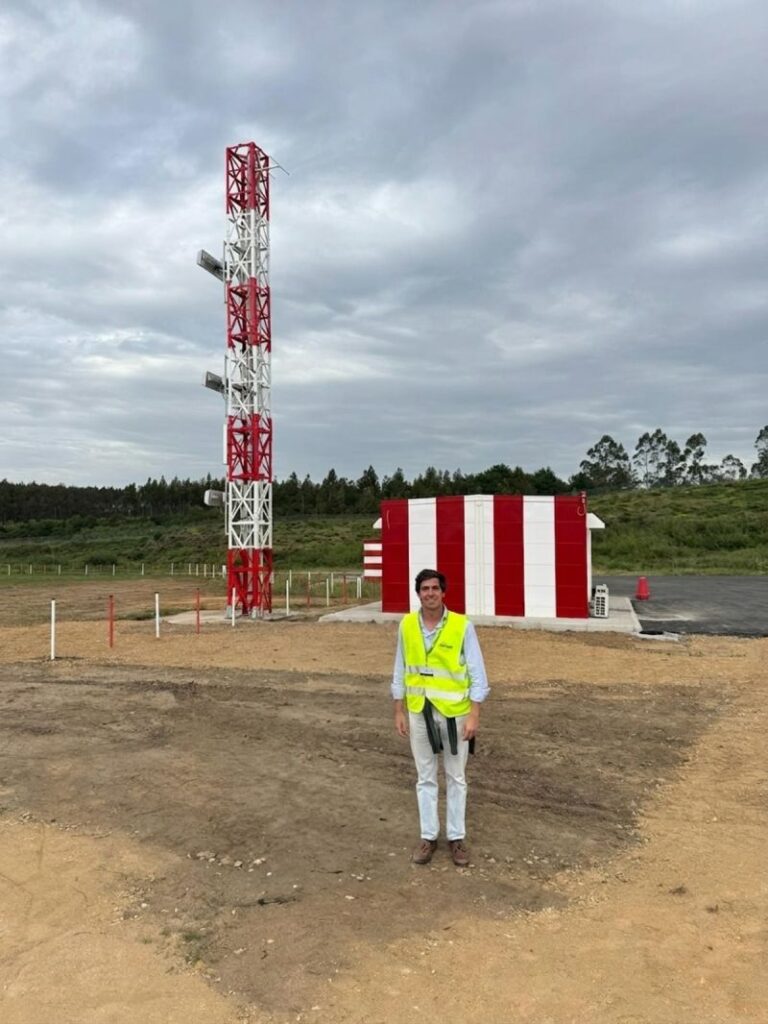
Although it goes completely unnoticed by most passengers, the ILS is not a single device or a simple antenna installed next to the runway. It is a system of antennas, radio transmitters, and electronic equipment strategically distributed throughout the airport area that transmit precise signals to aircraft during approach and landing.
Thanks to these markers, pilots receive constant information about their position relative to the runway centerline and the correct descent path, enabling safe approaches even when visibility is very limited. Their proper placement, calibration, and maintenance are essential to ensuring that the information received by the aircraft is accurate and reliable.
Much more than just a landing aid
The importance of ILS goes far beyond simply facilitating an approach.
Its availability directly affects an airport's operational capacity and its ability to maintain continuity of operations when weather conditions deteriorate.
“Without a reliable ILS, an airport’s operational capacity would be seriously compromised when visibility is reduced due to weather conditions,” emphasizes Juan Ignacio Galán, an air navigation technician at Viarium.
For this reason, the renovation or replacement of these systems is considered a strategic initiative within any airport infrastructure.
The Challenge of Working Next to an Operational Runway
Unlike other airport infrastructure, ILS systems are located in particularly sensitive areas of the airfield, very close to the runway and aircraft movement areas.
This circumstance makes any action taken on the system a major technical and operational challenge.
“The complexity of replacing an ILS isn’t just about the technology. The real challenge is doing it so close to the runway while causing as little disruption as possible to the airport’s daily operations”, adds Juan Ignacio.
In addition to specialized engineering work, this type of project requires coordination among aviation agencies, airport operators, contractors, and those responsible for operational safety and highly specialized technical teams.
The Case of Santiago Airport
One of the most recent examples of this complexity has been the upgrade of the ILS system at Santiago-Rosalía de Castro Airport.
The work was carried out simultaneously with the renovation and improvement of the airfield, as part of a project that required the temporary closure of the airport for 35 days to perform critical infrastructure work.
The overlap of multiple strategic projects made it necessary to develop a particularly rigorous plan to ensure that the deadlines for the opening were met.
“Coordination among all the various activities was crucial. There were numerous critical tasks being carried out simultaneously, and meeting the deadlines was essential to ensure the infrastructure could be put into service”, Galán recalls this incident.
The presentation highlighted the importance of coordination among all stakeholders and the role that air navigation systems play in the overall operation of an airport.
Essential infrastructure for air connectivity
Although it remains invisible to most users, the ILS continues to be one of the most important pieces of infrastructure for ensuring the safety and reliability of airport operations.
Its ability to keep airports operational in conditions of low visibility makes it a strategic tool for air connectivity and for the smooth operation of the transport modern aircraft.
Behind every safe landing in adverse weather conditions lies a combination of technology, planning, coordination, and specialized engineering that allows operations to continue as normal.

