
Burgas Airport has successfully completed an ambitious project to modernize its airport infrastructure, which included the comprehensive renovation of the runway and the refurbishment of part of the apron. This project, valued at approximately 60 million euros, represents the largest single investment in the airport’s history and the largest private investment ever made in the infrastructure sector in Bulgaria.
In this context, Viarium’s responsiveness proved essential in establishing the management, oversight, and coordination structure required for an operation of this scale. Thanks to these efforts, key elements necessary for the operation and the airport security, thereby definitively strengthening its capacity to handle air traffic in one of the country’s major tourist destinations and economic hubs.
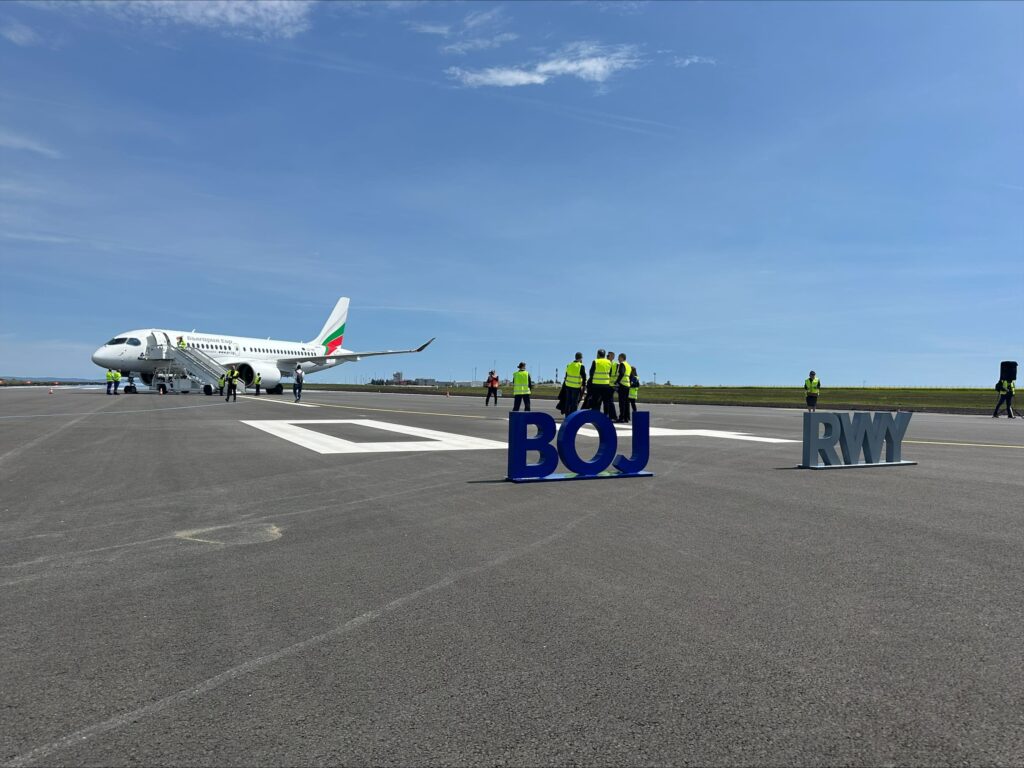
Following a six-month scheduled closure during the off-season, strategic planning executed with the utmost precision and in record time ensured that the airport could proudly celebrate its inaugural flight on April 29, 2026, and resume normal commercial operations on May 1, 2026.
This historic milestone was marked by the exciting landing of special flight FB 2204, operated by the national airline Bulgaria Air (an Airbus A220-100 arriving from Sofia). The choice of this flight number was a thoughtful technical nod during the official ceremony organized in collaboration with the project’s institutions and partners, as it symbolically coincided with the technical designation and magnetic orientation of the rehabilitated runway itself (04/22).
The Role of Viarium
Viarium participated in the project as the person in charge of Project Management, Site Supervision, FIDIC Engineer, and Contract Administration.
The company's involvement provided the project with the management and oversight structure needed to tackle a project that was particularly demanding, both in terms of its technical scope and the deadlines set for its completion.
To achieve this level of precision in such a demanding environment, the company deployed a multidisciplinary senior management team on the ground, consisting of 12 specialists of various nationalities. This international team included top-tier professionals in project management, aeronautical engineering, civil engineering, hydraulic engineering, electrical engineering, surveying, cost control, planning, materials, and quality control, demonstrating the firm’s ability to provide comprehensive solutions with rigor and responsibility.
«One of the biggest challenges of the project was responding quickly to the demands of a strategic initiative that could not tolerate delays. The ability to rapidly assemble a specialized team and support the client from the very beginning proved crucial to ensuring the successful progress of a project of this magnitude.»
— Lorenzo Palomo, CEO at Viarium
Scope of the project
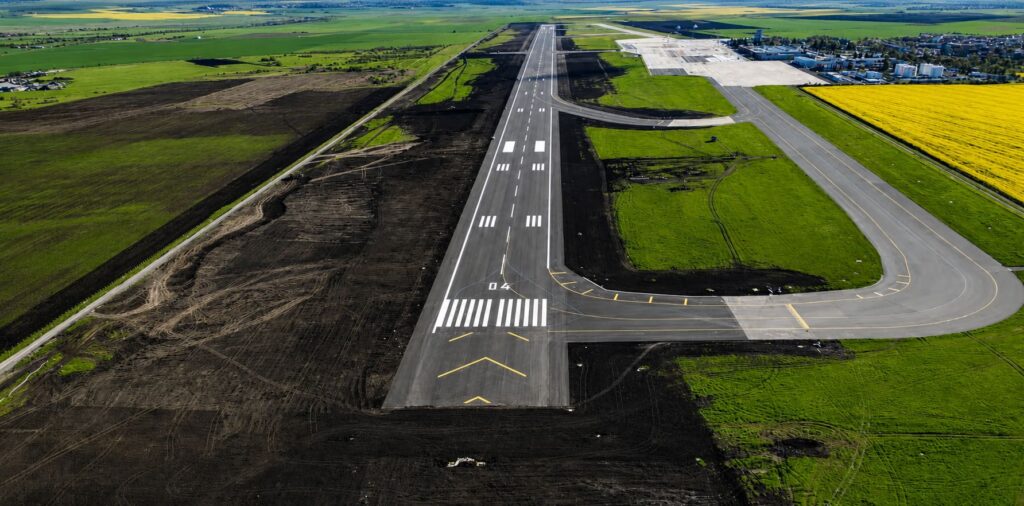
The work included resurfacing the runway, partially renovating and reconfiguring the apron, upgrading the drainage systems, and completely modernizing the aviation lighting and navigation lights.
In addition, new high-rise lighting towers were installed to improve the infrastructure’s operational conditions.
Project scope
Some of the key figures from the performance include:
The work supervised and coordinated by our teams made it possible to completely transform the infrastructure’s operational conditions. Among the key figures and statistics that reflect the scale of the project are:
- Renovation of a 3,202-meter-long runway, where more than 127,000 tons of a special asphalt modified with state-of-the-art polymers were used to ensure maximum performance and durability.
- More than 200,000 m² of geogrid high-strength anchors installed to reinforce the pavement structure.
- More than 7.5 kilometers of drainage installed, with the entire drainage system spanning more than 9.6 kilometers.
- Comprehensive renovation of the aviation lighting and beacon system, replacing the old equipment and installing a modern, efficient system with 368 new LED lights, as well as upgrading a total of more than 500 aviation beacons, which are essential for the the importance of visual aids.
- Installation of approximately 92 kilometers of cabling and more than 65,000 meters of piping and cable ducts for the aircraft systems.
- Redesign and expansion of the apron, including 13,800 m² of new high-strength concrete and 6,400 m² of new asphalt pavement.
- Construction of eight new lighting towers high-rise construction and the strategic relocation of an existing structure.
Key Points and Conclusions
The project was carried out in an airport environment with the highest technical standards and meticulous planning, driven by the need to concentrate the work during the winter months to minimize disruption to airlines and passengers, ensuring a seamless opening for the start of the peak season. Behind this complex organization lay months of intense preparation to coordinate more than 200 guests, media representatives, and officials for the grand opening ceremony.
This successful inaugural flight and the subsequent reopening of Burgas Airport mark the culmination of one of the most significant modernization projects recently undertaken at this facility. Beyond the physical renovation of the runway and apron, the project enhances the airport’s operational capacity and helps solidify its role as a gateway to one of Bulgaria’s most important tourist regions.
For Viarium, this project highlights the importance of responsiveness, planning, and specialized technical management in highly complex airport projects, where coordination among multiple teams and disciplines is essential to achieving the intended objectives and ensuring a smooth transition to a new operational phase.

